Creeping Stems: A Thoughtful Border for Real Embroidery Work
As a designer who’s stitched hundreds of borders across apparel, baby items, and boutique merchandise—and reviewed dozens of digital embroidery files for craft businesses—I approached Creeping Stems with quiet curiosity, not hype. I wasn’t looking for “fancy.” I was asking: Does this border hold up when it’s stitched on a soft organic cotton tote? Will it read clearly on a ribbed sweatshirt cuff? Does it feel intentional—not just decorative, but *designed*?
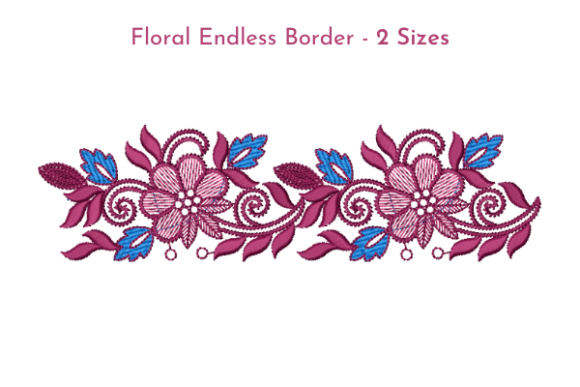
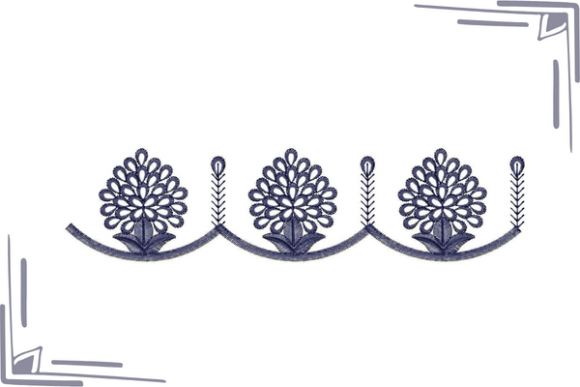
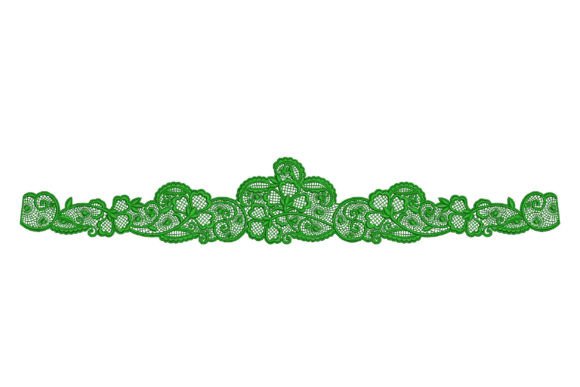
The first thing that struck me was its rhythm. Creeping Stems isn’t a rigid repeat; it’s a gentle, asymmetrical vine—tendrils curling left and right, leaves varying subtly in size and tilt. It breathes. That natural flow makes it ideal for curved edges (like pillow covers or apron hems) and avoids the “cookie-cutter” fatigue common in overused border patterns. It leans botanical, not botanical-illustration—so it feels warm and handmade, not clinical or clip-art.
I tested it on a custom embroidered tote bag for a local café—a project where brand warmth matters as much as durability. The border wrapped cleanly around the bottom hem, and because the design avoids tight clusters of dense fill stitch, it didn’t pucker the medium-weight canvas. No stabilizer surprises. No thread nesting. Just clean satin-stitched stems and soft fill-stitched leaves that held their shape after washing and ironing. Customers noticed it—not as “embroidery,” but as *care*. That’s the quiet power of a well-judged border.
Creeping Stems shines where subtlety supports storytelling: on baby onesies (paired with a single monogram), tea towels for a kitchen boutique, linen pillow covers for a neutral nursery, or even as a refined accent on the brim of an embroidered cap—though here, I’d recommend testing hoop placement carefully, since curved surfaces compress stitch alignment.
It’s less suited for ultra-tiny applications. On a child’s wristband or narrow hat band, some leaf details risk blending together unless you reduce scale thoughtfully—and always check how that affects stitch density. Likewise, on stretchy knits like lightweight t-shirts, I’d pair it with cutaway + tear-away stabilizer and avoid placing it over seams or high-movement zones. The design’s gentle curves don’t fight fabric movement—but they won’t mask poor stabilization either.
For Etsy sellers and small shop owners: Creeping Stems adds perceived value without complexity. It elevates a plain sweatshirt into a curated piece, turns a basic kitchen towel into a gift-worthy item, and gives holiday embroidery (think: linen napkins for Thanksgiving) a grounded, seasonal elegance—no pumpkins or snowflakes required. Its visual personality is calm but confident, which helps maintain brand consistency across product lines.
Where it truly earns its place in your design assets is in versatility across light and dark fabrics. I ran quick black-and-white mockups—yes, even before stitching—and confirmed that the contrast between stem outlines and leaf fills remains legible on both charcoal twill and ivory linen. That means fewer color-matching headaches for your customers, and smoother production when fulfilling custom apparel orders.
A few practical notes from real use:
- Always test on scrap fabric first—especially if pairing with textured weaves (like bouclé or heavy jacquard) where fill stitch can sink unevenly.
- Review stitch density before scaling. Some versions of floral borders get overly dense at larger sizes; Creeping Stems stays breathable, but verify yours doesn’t pack too many layers in tight leaf corners.
- Confirm hoop size compatibility. As a border, it’s likely offered in multiple widths—but double-check whether your standard 4x4 or 5x7 hoop fits the version you’re using, especially for long runs on tote bags or blankets.
- Inspect small details under magnification—not just on screen, but stitched. Tiny stem tips or leaf veins should be crisp, not frayed or lost in thread buildup.
- Use proper stabilizer for your fabric type. Lightweight cotton? Tear-away works. Terry cloth towel? Go cutaway. Don’t assume one stabilizer fits all.
- Check licensing before selling finished products or digital embroidery files. If you’re an Etsy seller bundling borders for commercial use, confirm whether Creeping Stems permits resale of stitched items or redistribution of the embroidery file itself.
One underrated strength: Creeping Stems works beautifully as part of a larger composition—not just as a standalone border. I’ve layered it beneath a simple script monogram on a linen market bag, used it to frame an applique design on a baby blanket, and even reversed its orientation to create a top-and-bottom framing effect on a square pillow cover. It’s flexible without being generic.
For craft business owners building a cohesive collection, this border pairs well with minimalist lettering, subtle geometric motifs, or other nature-adjacent elements (think: single wildflower motifs or abstract seed shapes). It avoids trend fatigue—no neon gradients, no exaggerated line weights—so it stays relevant season after season.
If you're evaluating Creeping Stems for a holiday embroidery run, a new line of personalized gifts, or a refreshed boutique product line, ask yourself: Does it support the *feeling* I want my customer to have? Calm. Considered. Handmade, but never amateurish. That’s where this border delivers—not as decoration, but as intention made visible.
Bottom line: Creeping Stems is the kind of machine embroidery design that disappears into the work—until someone stops to admire the detail. And that’s exactly what good border design should do.