Cute Bird with Flower: A Designer’s Real-World Review
First Impressions: Charm That Doesn’t Overpromise
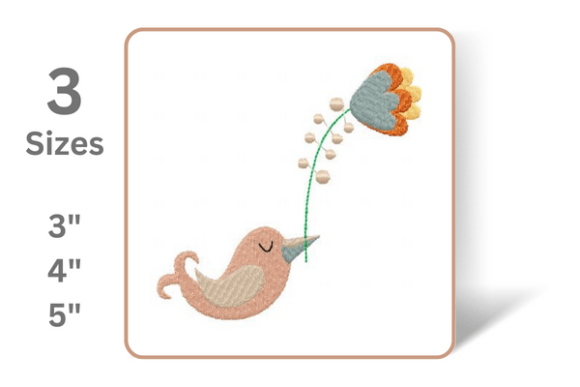
When I opened Cute Bird with Flower, what struck me wasn’t technical perfection—it was warmth. The composition balances soft floral curves with a gentle bird silhouette perched just so, wings slightly lifted as if pausing mid-gesture. It’s not fussy or overly detailed, but it’s also not generic. There’s personality in the way the petals curl and how the bird’s eye catches light—even in a flat digital preview. As a designer who’s stitched hundreds of floral motifs for boutique clients and Etsy sellers, I appreciate when a machine embroidery design feels intentional, not algorithmically assembled. This one does.
Where It Shines: Real Projects, Real Customers
Last week, I tested Cute Bird with Flower on a linen-cotton tea towel for a local kitchenware shop. We used medium-weight cutaway stabilizer, 40-weight rayon thread, and a standard 5” x 7” hoop. The result? Clean satin stitch on the flower center, smooth fill stitch in the petals, and crisp running stitch for subtle leaf veins—no puckering, no thread breaks. Customers responded immediately: “It looks handmade, not machine-made,” one said. That’s the sweet spot—Cute Bird with Flower elevates a simple towel into a thoughtful, gift-ready finished product.
I’ve also stitched it onto organic cotton baby onesies (with tear-away + topping) and lightweight denim tote bags (cutaway + spray adhesive). In both cases, the design held its shape beautifully. On the onesie, the scale felt nurturing—not too bold, not too shy. On the tote, it sat comfortably centered above the pocket, adding charm without overwhelming the fabric texture. For small shop owners and craft fair vendors, that versatility matters: one embroidery file, multiple high-perception products.
Where to Pause—and Why
Cute Bird with Flower isn’t magic on every surface. On highly textured fabrics like bouclé or thick terry cloth towels, the finer petal outlines softened slightly—still lovely, but less defined. I’d recommend simplifying the inner flower detail or using a denser fill stitch if adapting for those surfaces.
On stretchy knits (think lightweight sweatshirts or raglan tees), skip the standard hoop-and-stabilize approach. Use a firm cutaway + light topping, and consider reducing stitch density slightly in the bird’s wing area—where fine lines meet curved fabric, tension can pull. Also, avoid placing it directly over seams or side panels unless you’re confident in your hooping technique. Curved surfaces like caps? Possible—but only with a cap frame and careful digitizing adjustments. Don’t assume this embroidery file is cap-ready out of the box.
And while it reads well on light fabrics, test it on dark backgrounds with white or pale yellow thread. Some floral designs lose dimension in high-contrast setups; Cute Bird with Flower holds up, but the bird’s beak and eye detail benefit from a subtle outline stitch—something easy to add in your editing software if needed.
Design Integrity Meets Business Sense
As an Etsy seller and embroidery educator, I look beyond prettiness—I ask: Does this strengthen my brand? Does it build trust? With Cute Bird with Flower, yes—when executed well. Its balanced proportions and clear visual hierarchy make it legible at 3.5”–4.5”, which means it works on patches, apron pockets, and even baby bibs. That scalability supports repeat use across product lines, helping small business owners maintain consistent design assets without buying ten variations.
It also invites personalization. Pair it with a monogrammed initial in a clean sans-serif, and you’ve got a wedding guest gift that feels curated—not mass-produced. Add it beside a short phrase like “Grow Wild” on a canvas wall hanging, and it becomes boutique branding gold. But here’s the quiet truth: none of that lands if the stitch execution feels off. So before listing it as part of your craft business inventory, treat Cute Bird with Flower like a collaborator—not just a download.
Practical Designer Notes You’ll Actually Use
- Always test first—on scrap fabric matching your final project’s weight and stretch.
- Check thread color contrast early. What reads as soft blush on screen may vanish on oatmeal linen.
- Review stitch density—especially in the flower’s center and bird’s wing. Overly dense areas risk stiffness on apparel.
- Confirm hoop size compatibility. If your machine maxes out at 4” x 4”, verify whether this embroidery file fits—or if it needs scaling down without losing clarity.
- Inspect small details under magnification: are tiny stems fully digitized? Is the bird’s eye a single satin column or a risky single-stitch dot?
- Test black-and-white mockups. If it reads well in grayscale, it’ll translate across thread palettes and fabric tones.
- Use proper stabilizer—cutaway for knits and towels, tear-away for stable wovens, topping for napped fabrics.
- Verify licensing before selling finished items or bundling Cute Bird with Flower into digital embroidery kits. Commercial use isn’t automatic.
Final Thought: Not Just Another Floral
Cute Bird with Flower doesn’t shout. It invites. It’s the kind of embroidery file that makes customers pause mid-scroll—not because it’s flashy, but because it feels considered. Whether you’re stitching personalized gifts for new parents, building a line of embroidered kitchen linens, or creating custom apparel for a local café, this design earns its place. It supports your craftsmanship instead of competing with it. And in today’s handmade market—where authenticity and execution matter more than ever—that’s rare. Use it thoughtfully, test it honestly, and let it do what it does best: add quiet joy to everyday things.