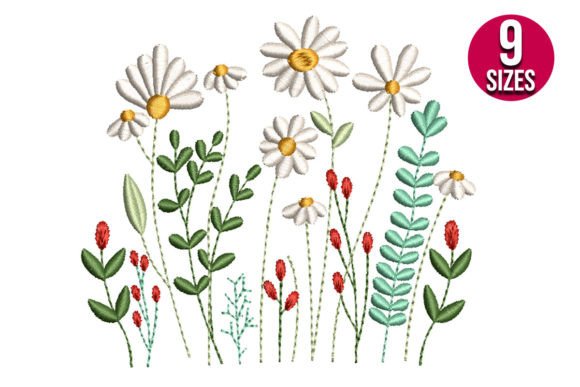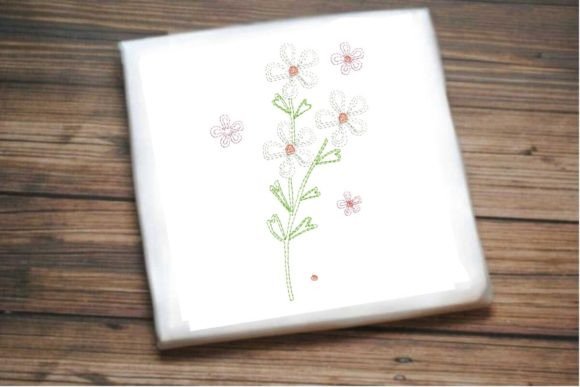
One Line Flower Bouquet
A Minimalist Floral Design That Builds Brand Trust
As an embroidery designer who’s developed hundreds of commercial machine embroidery designs for small businesses—from neighborhood bakeries to indie florists and handmade studios—I approached the One Line Flower Bouquet with a critical eye: not just “does it look pretty?” but “does it work *for business*?” The title alone signals intention—one line, flower bouquet, minimalist. That’s not decorative fluff. It’s a design discipline that translates directly into stronger brand identity, cleaner merch execution, and higher perceived value.
First Impression: Elegant, Intentional, Professionally Handmade
The phrase “Discover elegance” in the description isn’t marketing hype—it’s accurate. This isn’t a fussy, layered bouquet with overlapping petals and dense fill stitches. It’s a single, confident line that flows through stem, leaves, and blooms in one continuous motion. That gives it an immediate sense of craftsmanship and control. For small business owners, that reads as professional, thoughtful, and premium—not generic or clip-art-like. Whether your brand leans modern (think ceramic studio or sustainable skincare), rustic-chic (a farmhouse florist or pet boutique), or quietly elegant (a bespoke stationery shop), the One Line Flower Bouquet adapts without shouting. It doesn’t compete with your voice—it supports it.
Where It Shines in Real Business Use
This design excels where clarity, consistency, and scalability matter most:
- Embroidered patches: Clean lines hold up beautifully at 2"–3" sizes—ideal for iron-on or sew-on branding on aprons, tote bags, or staff jackets.
- Cap embroidery: Its horizontal flow fits naturally across front panels or curved bill sides without distortion—no awkward cropping or forced scaling needed.
- Apron embroidery: Positioned above the pocket or centered on the chest, it adds quiet sophistication without overwhelming functional fabric.
- Tote bag design: Works flawlessly on canvas, cotton duck, or linen—especially when stitched in tonal thread (e.g., olive on natural canvas) for subtle, elevated branding.
- Product packaging accents: Stitched onto fabric tags, gift wrap bands, or reusable pouches, it reinforces handmade authenticity at point-of-sale or unboxing.
- Custom apparel: Looks equally intentional on organic cotton tees, linen shirts, or denim jackets—never dated, never distracting.
Because it’s inherently scalable and low-stitch-density, the One Line Flower Bouquet also performs well in printable mockups for Etsy listings, wholesale catalogs, or client presentations—helping buyers visualize real-world application before stitching begins.
Where to Use It Thoughtfully
Even strong designs have boundaries. Here’s where attention matters:
- Small patch sizes under 1.5": Test stitch first—the line weight must remain legible. If stems or blossoms blur, adjust digitizing or opt for a simplified variant.
- Curved surfaces like cap bills or sleeve cuffs: Ensure the design’s flow aligns with the curve—not against it. A gentle arc in the original line helps; avoid forcing rigid geometry.
- Dark uniforms or textured fabric: Contrast is non-negotiable. Black thread on navy twill? Verify visibility. Consider matte thread over glossy for better readability on tweed or heavy canvas.
- Frequent-wash items (e.g., café aprons): Confirm stabilizer choice—cutaway works best for longevity on high-abrasion fabrics.
- Commercial embroidery projects: Always verify licensing terms. Since this is marketed as an instant-download digital embroidery file, confirm it includes commercial use rights before applying to client-branded merchandise.
How It Strengthens Your Brand Identity
Consistency builds trust—and the One Line Flower Bouquet delivers visual continuity across touchpoints. When it appears identically on a staff cap, a customer tote, and a product label, it silently communicates cohesion and care. Unlike ornate bouquets that age quickly or feel seasonal, this design feels timeless. That elevates perceived professionalism and makes your handmade product feel more intentional—not incidental. Customers subconsciously associate clean, confident lines with reliability. And because it avoids cliché floral tropes (no roses-only, no overdone vines), it supports niche positioning—whether you’re a minimalist pet brand or a botanical tea company.
Practical Designer Notes Before You Stitch
Before sending the One Line Flower Bouquet to production—or presenting it to a client—follow these steps:
- Test it in black and white first: Does the line retain its rhythm and balance without color distraction?
- Check performance at your smallest intended patch size: Will it read clearly on a 1.75" woven label or cap front?
- Review thread color contrast on your target fabric swatch—not just on screen.
- Inspect spacing between elements: Are loops and curves open enough to avoid nesting or thread buildup?
- Confirm hoop size compatibility: Does it fit comfortably within your standard embroidery hoop without re-hooping mid-stitch?
- Test on real fabric with your usual stabilizer stack—especially on stretchy or napped textiles.
- Create a physical or high-res printable mockup for client approval—this prevents costly rework later.
- Compare it beside your other design assets: Does it harmonize with your logo, typography, and existing embroidered motifs?
- Verify commercial licensing: Since this is positioned for small business merch and branded patch use, ensure your purchase grants rights for resale, promotional use, and client projects.
Remember: a great machine embroidery design isn’t just about aesthetics—it’s about function, fidelity, and flexibility across materials, scales, and applications. The One Line Flower Bouquet earns its place in your design assets library because it delivers all three—without excess. Whether you're building a cohesive small business merch system or sourcing a signature accent for your next custom apparel drop, this is the kind of embroidery file that works quietly, consistently, and professionally—so your brand gets the attention, not the stitch count.