Floral Round Frame: A Designer’s Real-World Review
First Impression: Delicate, Balanced, and Quietly Confident
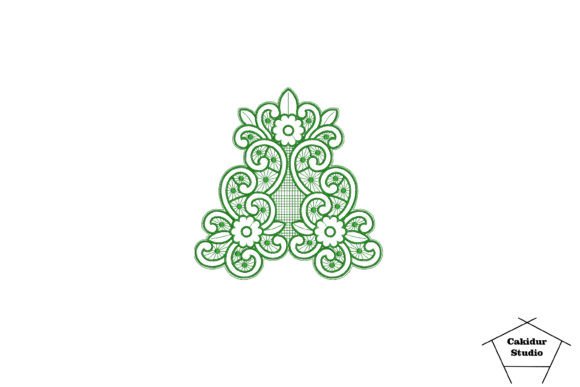
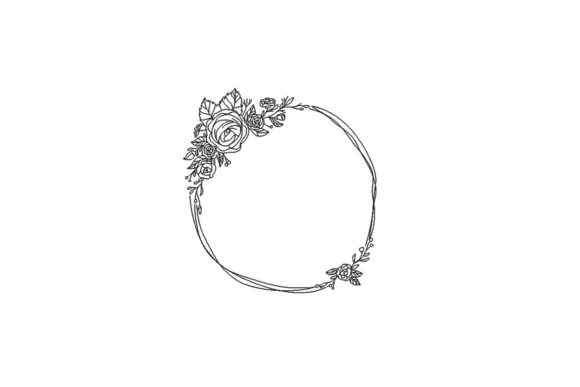
Opening Floral Round Frame for the first time, I didn’t see “cute” or “trendy”—I saw intention. The round frame feels like a quiet nod to vintage botanical illustrations, but with clean, modern spacing. It’s not fussy; no overlapping petals or tangled stems. Just an open, airy circle of stylized blooms—some outlined, some lightly filled—arranged to breathe on fabric. This isn’t a design that shouts. It invites closer looking. That makes it ideal for pieces where craftsmanship should speak louder than clutter: think linen tea towels, organic cotton baby onesies, or minimalist tote bags for a boutique brand.
Real Project Test: Stitching It on a Linen-Cotton Blend Tote Bag
Last week, I stitched Floral Round Frame onto a natural-toned linen-cotton blend tote—intended as a small-batch holiday gift for a local florist’s pop-up shop. I used medium-weight cutaway stabilizer, 40-weight rayon thread in soft sage, dusty rose, and cream, and ran it at standard density. The result? Crisp outlines held their shape beautifully across the slightly nubby texture. No skipped stitches, no puckering—even along the outer curve of the frame. What stood out most was how the design *settled* into the fabric instead of fighting it. That’s rare in outline-heavy floral embroidery. Too many similar designs collapse under their own weight on textured surfaces. Floral Round Frame doesn’t. It lifts just enough to read clearly, without demanding heavy backing or dense fills.
Where It Shines (and Where It Asks for Thought)
- Custom apparel: Works cleanly on sweatshirt cuffs, back yokes, or chest pockets—especially when you want elegance without bulk. Avoid full-front placements on oversized hoodies unless you’re pairing it with a subtle monogram or date.
- Baby embroidery: Perfect for onesies, burp cloths, or crib bumpers. Its open layout means fewer dense satin-stitch zones—so less stiffness against delicate skin.
- Patches & applique designs: Clean outer edge = easy cutting and clean backing. Holds up well after heat-sealing or sew-on attachment.
- Holiday & wedding gifts: Feels special without being overly thematic—ideal for “just because” handmade presents that age gracefully.
- Etsy listings & printable mockups: Translates effortlessly to digital previews. Looks equally strong in black-and-white line art and soft color palettes—giving buyers flexibility in imagining it on their own products.
Use With Care: Practical Limits Every Designer Should Know
Floral Round Frame is graceful—but grace has boundaries. It’s not built for extreme scale shifts. On hoops smaller than 4×4 inches, the inner flower details begin to compress. Tiny buds or fine stem lines may blur or vanish entirely in stitch-out, especially with lower-end machines or older firmware. Likewise, avoid stretching it across curved surfaces like baseball caps without testing seam placement first—the round symmetry can distort near the bill curve.
On dark fabrics, contrast matters more than usual. Since much of Floral Round Frame relies on outline clarity rather than bold fill stitch, low-contrast thread (e.g., charcoal gray on navy) risks fading into the background. Always test thread colors on scrap fabric—not just digitally. And on thin or stretchy knits (like lightweight tees), use tear-away + light cutaway stabilizer combo. The design’s open structure means less inherent support from dense stitching, so stabilizer choice directly affects stitch definition.
What It Adds to Your Finished Product—Beyond Pretty
This isn’t just decoration—it’s a quiet value amplifier. When stitched well, Floral Round Frame elevates perceived quality. Customers notice the even spacing, the consistent line weight, the lack of visual noise. That builds trust: they assume care went into the whole process, not just the stitching. For craft businesses and Etsy sellers, that translates to higher perceived price tolerance and better repeat engagement. It also supports brand consistency—whether you’re using it across kitchen linens, baby gear, or custom apparel, it reads as part of a cohesive design language, not a one-off clipart add-on.
And let’s be real: gifting matters. A hand-embroidered pillow cover with Floral Round Frame feels intentional, personal, and unhurried—exactly what buyers seek in handmade product spaces. It avoids seasonal cliché while still feeling warm and human.
Designer Notes You’ll Actually Use
- Test on scrap fabric *first*—especially if using textured, dark, or stretchy materials.
- Review stitch density before hooping. If your machine allows, reduce density by 5–10% on lightweight fabrics—it often improves drape without sacrificing legibility.
- Confirm hoop size compatibility. Floral Round Frame fits comfortably in a 5×7 hoop, but check file dimensions before assuming it scales down cleanly.
- Inspect small details at 200% zoom in your embroidery software—look for stray jump stitches or tiny unconnected elements near petal tips.
- Run black-and-white and high-contrast mockups. Does the shape hold up when stripped of color? (It does—this is a strength.)
- Compare performance on light vs. dark fabric backgrounds. Adjust thread saturation accordingly—not just hue.
- Use proper stabilizer for your base fabric. Outline Flowers like this rely on clean edges, not fill weight, to communicate form.
- Verify licensing terms before selling finished items or bundling Floral Round Frame as part of a commercial embroidery file pack.
Final Thought: A Design That Respects the Maker—and the Wearer
Floral Round Frame doesn’t try to do everything. It doesn’t cram in extra vines, hidden initials, or glitter-effect stitches. It offers restraint, rhythm, and room to breathe—both in the design itself and in how it behaves under needle and thread. That makes it unusually versatile for real-world embroidery projects: from a single custom sweatshirt to a batch of boutique tea towels, from baby embroidery to holiday gift tags. It’s the kind of machine embroidery design that feels like a collaboration—not a command. And in a space crowded with overdesigned digital embroidery files, that’s quietly revolutionary.