Floral Peacock Embroidery Design Review
First Impression: Elegant, Decorative, and Instantly Recognizable
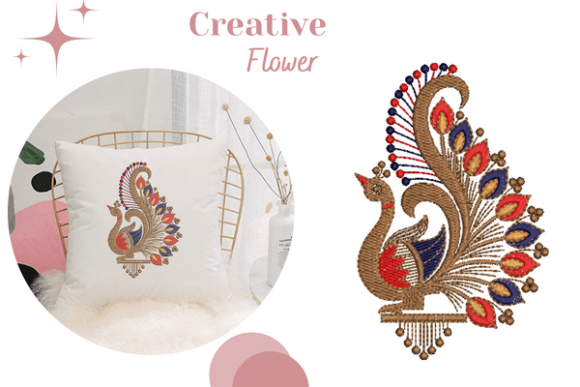
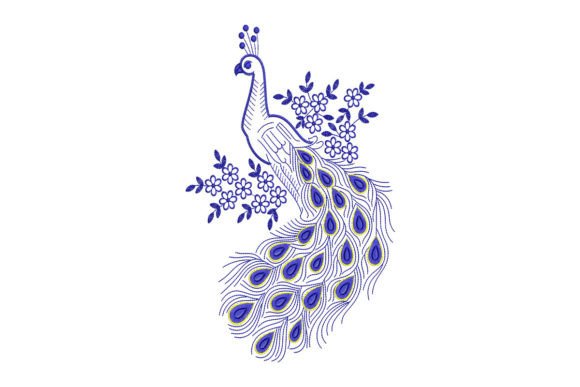
As an embroidery designer who’s prepped over 200 craft fair booths, my gut reaction to Floral Peacock is immediate: this is a premium, decorative machine embroidery design with strong visual hierarchy. The name alone cues elegance and artistry—no whimsy, no minimalism, no rustic shorthand. It leans into the Birds category with intention, but the “Floral” modifier lifts it beyond literal avian representation into something more curated and boutique-ready. At a glance, customers will read it as handmade luxury—not crafty-cute or festival-fun, but refined, giftable, and display-worthy.
Where Floral Peacock Shines on Craft Fair Products
In my booth setup—tote bags, aprons, tea towels, embroidered patches, fabric pouches, pillow covers, and market bags—Floral Peacock performs strongest where scale and surface support detail: on medium-to-large tote bag designs (centered or lower-quadrant), front-panel apron embroidery, and pillow covers with clean, taut fabric. It also works beautifully as a focal point on structured fabric pouches and as a standalone embroidered patch for jackets or denim.
It’s less effective on curved surfaces like caps—unless scaled down significantly and simplified—and struggles on highly textured tea towels unless stitched with extra stabilizer and reduced stitch density. On dark fabric, contrast becomes critical: recommend rich jewel-toned thread colors (emerald, sapphire, amethyst) paired with metallic gold or silver accents to preserve legibility and depth.
Photography & Online Appeal for Etsy Sellers and Digital Crafters
This design photographs exceptionally well for Etsy listings and printable mockups—especially when captured on natural light, neutral backdrops with soft shadows. Its balanced composition (central peacock motif framed by organic floral elements) creates strong visual rhythm, which translates directly into scroll-stopping thumbnails. As a digital embroidery file, Floral Peacock supports multiple product mockup variations without needing redesign: one high-res file can power listings for totes, aprons, and pillow covers, making it a smart asset for small shop owners managing limited design inventory.
For Cricut and hybrid crafters, note that Floral Peacock isn’t cut-file friendly—it’s a true embroidery file, built for multi-step stitching. Don’t try to convert it to iron-on or vinyl; its value lies in the dimensionality of thread.
Production Practicality: Batch-Friendly, But Not Foolproof
Floral Peacock is repeatable for batch production—but only if you respect its structure. It reads clearly at 4–5 inches wide, making it ideal for standard hoop sizes (5x7" or larger). Smaller than 3 inches? Tiny floral tendrils and peacock feather details risk blurring or disappearing entirely, especially on dense fabrics or with low-contrast thread. Avoid using it as a tiny accent on collar bands or pocket flaps unless you’ve tested it first.
Stitch density is moderate-to-high in the central plumage area—so plan stabilizer accordingly: cutaway for stretch knits (like tote bag canvas), tear-away for stable cottons (aprons, pillow covers), and heavy-duty cutaway for textured tea towels. Always test on scrap fabric matching your final product’s weight and weave.
Key Production Notes Every Embroidery Designer Should Check
- Test the design on scrap fabric before committing to 50 tote bags—fabric texture changes everything.
- Check thread contrast across at least three fabric colors: white, charcoal, and oatmeal. What pops on ivory may vanish on heather gray.
- Review spacing between floral elements—tight clusters can cause thread nesting or skipped stitches on slower machines.
- Confirm hoop size compatibility with your primary embroidery machine. If your standard hoop is 4x4", Floral Peacock likely requires re-hooping or resizing.
- Inspect stitch density in the peacock’s eye and tail fan—overly dense areas trap moisture and stiffen fabric unnaturally.
- Use the right stabilizer for each product type: lightweight cutaway for aprons, fusible web + tear-away for patches, and ultra-stable cutaway for market bags.
- Create at least one real mockup—not just a digital preview. See how light catches the threads in person.
- Compare fabric colors side-by-side under both daylight and booth lighting—what looks warm in sunlight may read cool under craft fair tent lights.
- Confirm commercial licensing before selling finished products. This is a commercial embroidery asset—you must verify usage rights for resale.
Booth Impact and Customer Engagement
In live craft fair settings, Floral Peacock draws attention without shouting. It doesn’t compete with neon or typography—it invites pause, appreciation, and tactile curiosity. Customers linger longer at displays featuring it on pillow covers or structured pouches, often asking, “Is that all thread?” That’s your opening to highlight handmade quality and craftsmanship.
It strengthens brand consistency for boutiques and handmade shops aiming for elevated, cohesive collections. Paired with muted linen, heavyweight cotton, or brushed twill, Floral Peacock signals intentionality—not just decoration, but storytelling in stitch.
Final Verdict: A Standout Handmade Product Anchor
Floral Peacock isn’t just another bird embroidery design—it’s a strategic craft fair product anchor. It elevates perceived value, supports premium pricing, and bridges home décor, apparel, and gift markets seamlessly. For Etsy sellers juggling SEO, mockups, and fulfillment, it’s a versatile, photogenic, and emotionally resonant digital embroidery file. For embroidery business owners building a catalog of small shop products, it’s a reliable best-seller in spring and summer seasons—especially when styled with botanical packaging and earth-toned ribbons.
Just remember: its elegance demands intention. Don’t rush it. Test it. Respect its density. And always—always—hold the finished piece in natural light before packing it for the booth.