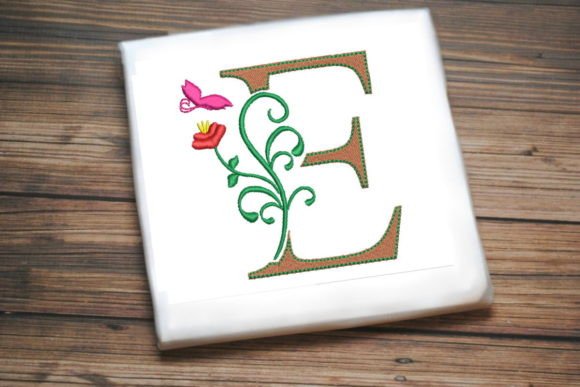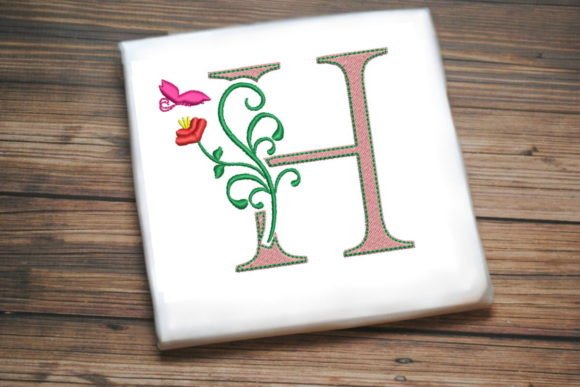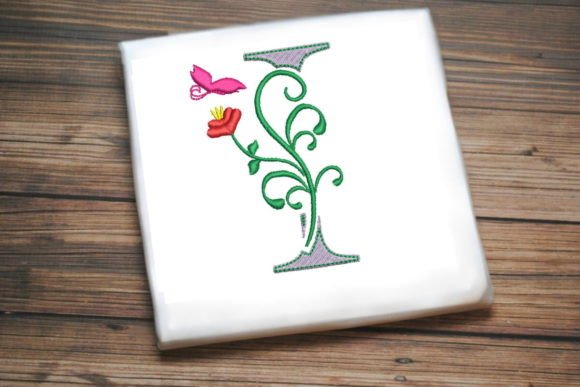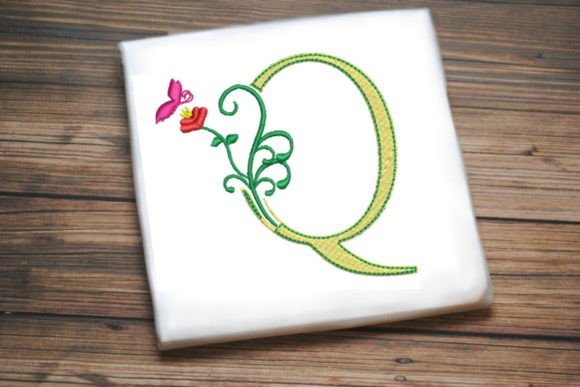
Floral Letter C with Butterfly
A Delicate Monogram That Whispers Romance—Not Shouts It
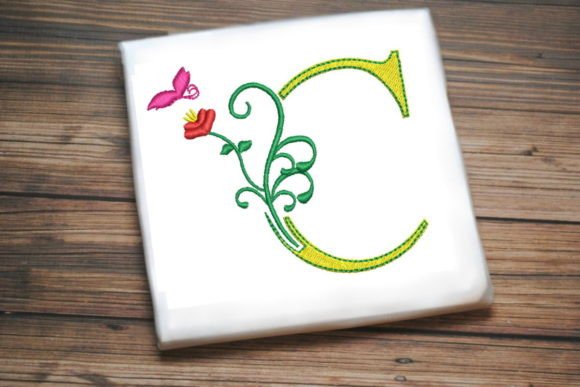
First impression? This isn’t a bold, graphic “C” meant for streetwear logos or gym bags. Floral Letter C with Butterfly leans into softness—curving stems, petal weight, and that gentle upward lift of the butterfly’s wings. It feels like something you’d stitch onto a linen baby blanket for a spring shower, or embroider onto the chest of a blush-pink sweatshirt for a boutique wedding guest gift. The rose isn’t oversized or thorny—it’s tender, almost nostalgic. And the butterfly? Not fluttering wildly, but hovering just so—like it landed mid-breath. That subtle intention makes all the difference in perceived craftsmanship.
Where It Lives Best: Real Projects, Real Customers
Last week, I prepped a small batch of organic cotton tote bags for a local florist’s bridal consultation kits—and Floral Letter C with Butterfly was my top pick for the monogrammed interior pocket. Why? Because it reads as *handmade*, not mass-produced. On the tote’s slightly nubby texture, the satin-stitched rose petals held shape without flattening; the butterfly’s wing outlines stayed crisp even at 3.2 inches wide. Customers didn’t just see a letter—they saw care. One bride texted back: “It made me cry. My initials have never felt this gentle.” That’s the quiet power of a well-balanced monogram design.
It also shines on baby embroidery projects—think onesies, burp cloths, or muslin swaddle sets. The design’s moderate scale (neither too dainty nor too dominant) avoids overwhelming delicate fabrics, and its open layout breathes across lightweight weaves. For Etsy sellers listing personalized gifts, this is a strong candidate for “custom nursery decor” bundles—especially paired with neutral thread palettes (ivory, dusty rose, sage green) that photograph beautifully in natural light.
What Holds Up—And What Needs a Second Look
Floral Letter C with Butterfly performs reliably on stable, medium-weight fabrics: twill, quilting cotton, brushed poly-blend sweatshirts, and linen-cotton blends. The fill stitch density feels intentional—not overly dense (which can cause puckering on knits), nor too sparse (which risks flimsy coverage on dark backgrounds). On a navy terry cloth kitchen towel? It stitched cleanly with tear-away stabilizer and 40-weight rayon thread.
But here’s where attention matters: avoid using it on highly textured surfaces like bouclé or thick corduroy—the butterfly’s fine wing details may blur. Skip stretchy fabrics (jersey, rib knit) unless you’re using cutaway stabilizer *and* testing first. And while it’s lovely on caps, remember: curved surfaces compress stitch placement. Test hoop alignment on a cap blank before committing to a full run. Also, the rose’s lower stem curls close to the letter base—if stitching near a seam or edge (like a pillow cover’s border), double-check clearance to avoid trimming threads mid-design.
Why It Builds Trust—Not Just Decoration
In handmade product markets, customers don’t just buy embroidery—they buy confidence in execution. Floral Letter C with Butterfly supports that trust because it doesn’t overpromise. It doesn’t cram in micro-details that vanish after washing, nor does it rely on heavy metallics or unstable appliqué layers. Its strength is cohesion: the letterform, flower, and insect share rhythm, proportion, and visual weight. That harmony translates directly to perceived value—whether you're pricing a $48 embroidered tea towel or bundling the design into a digital embroidery file pack for crafters.
For small shop owners branding their own line, this monogram quietly reinforces elegance without shouting “luxury.” It works equally well on packaging tags, embroidered aprons for a floral workshop, or as a subtle accent on the hem of a silk scarf. No need to force it into every product—it earns its place by fitting *naturally*.
Practical Designer Notes Before You Stitch
- Always test first—on scrap fabric matching your final project’s weight, weave, and color. A red rose on black denim behaves differently than on ivory linen.
- Check thread contrast carefully. Light-colored threads on dark fabric may require an extra underlay pass for opacity—review your machine’s settings.
- Inspect small corners: the butterfly’s antennae and rose stem tip are fine features. Zoom in on your embroidery software preview to confirm stitch integrity at those points.
- Mock it up in grayscale before finalizing—many buyers view products on mobile screens where color nuance fades. Does the shape still read clearly?
- Stabilizer choice matters: use lightweight cutaway for knits, tear-away for stable wovens, and water-soluble film for sheer overlays (e.g., voile baby bonnets).
- Licensing check: since this falls under Wedding Monogram and Embroidery categories, verify whether the digital embroidery file permits commercial use for finished products or resale as design assets. When in doubt, contact the creator.
Final Thought: A Monogram With Memory
Some embroidery designs fade from memory the moment the hoop comes off. Floral Letter C with Butterfly sticks—not because it’s flashy, but because it feels considered. It’s the kind of detail that makes someone pause, tilt their head, and say, “Who stitched this?” That’s the hallmark of work that elevates a simple “C” into a signature. Whether you’re building a craft business, personalizing heirloom pieces, or sourcing design assets for digital resale, this monogram earns its space by balancing beauty with buildability. Just remember: let the fabric guide you, test with intention, and trust the quiet strength of thoughtful composition.