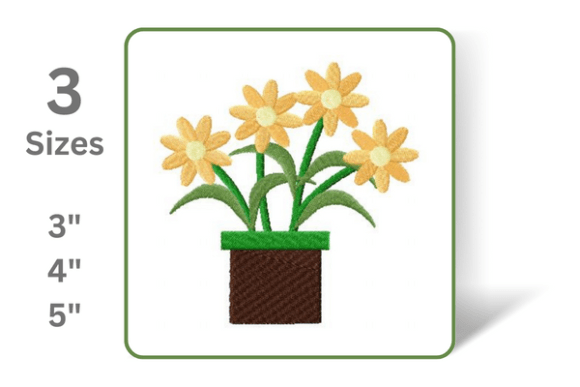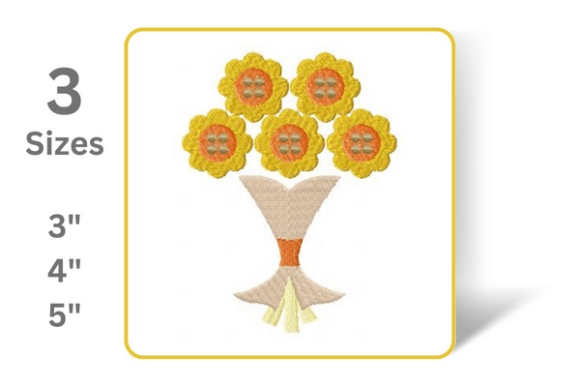
Bouquet: A Floral Embroidery Design for Small Business Branding
First Impression: Friendly, Elegant, and Versatile
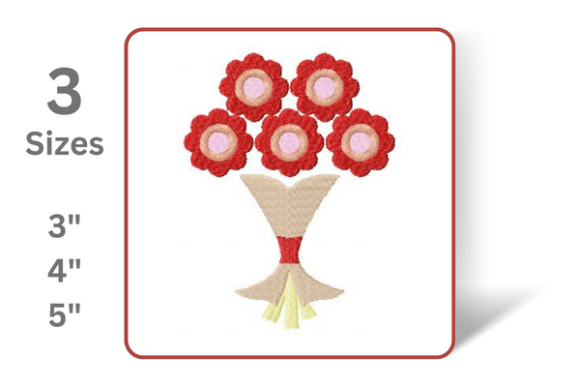
As an embroidery designer who’s developed hundreds of commercial designs for cafés, boutiques, florists, bakeries, and handmade brands, my first impression of Bouquet is immediate and positive: it reads as both elegant and approachable. The name alone evokes freshness, care, and natural charm—qualities small businesses lean into when building authentic brand identity. Based on its description as a “lovely flower embroidery” meant for pillows, towels, apparel, and home decor, Bouquet suggests soft curves, balanced composition, and a hand-crafted sensibility—not overly fussy, not too minimal. That sweet spot makes it ideal for small business merch where professionalism meets personality.
Real-World Performance Across Merchandise Types
Bouquet shines brightest where visual warmth and brand consistency matter most. On embroidered patches—whether sewn onto aprons, tote bags, or staff jackets—it delivers instant recognition without shouting. Its floral motif reads clearly at 2.5"–3.5", making it highly effective as a chest logo accent or sleeve detail for custom apparel. For cap embroidery, I recommend placing Bouquet on the front panel with a clean border or subtle outline to anchor the shape—its organic flow softens the rigid geometry of headwear while maintaining legibility.
For boutique merchandise and Etsy sellers, Bouquet works beautifully as a branded product add-on: think stitched onto linen napkins, canvas totes, ceramic mug sleeves, or even woven labels inside handmade garments. As a tote bag design, it balances well near the top seam or centered low on the front—no need for text to communicate value. On aprons for bakeries or florists, Bouquet adds quiet sophistication without competing with functional pockets or stains. And for event merch or customer gifts—like mini embroidered towels or tea towels—Bouquet reinforces a thoughtful, tactile brand experience that elevates perceived product value.
Where to Use Bouquet Thoughtfully
Like any floral machine embroidery design, Bouquet requires smart application—not every surface or scale suits its character. Avoid shrinking it below 1.75" for embroidered patches unless you’ve tested density and clarity; fine petal details may collapse or blur on curved surfaces like cap fronts or rounded tote handles. On dark uniforms (especially navy or charcoal), confirm thread color contrast—pastel pinks or pale yellows may fade visually without a white underlay or careful stitch planning.
High stitch density can be a concern if Bouquet includes layered petals or tight outlines. Always inspect spacing between elements: crowded stems or overlapping blossoms risk “stitch bleeding” on textured fabric like terry cloth or heavy canvas. Likewise, avoid using Bouquet on items subjected to frequent washing unless stabilizer choice and stitch tension are dialed in—floral motifs can lose definition if thread migration occurs over time.
How Bouquet Strengthens Brand Identity and Customer Trust
Small business owners often underestimate how much a single, well-executed embroidery file influences perception. Bouquet doesn’t scream “corporate”—it whispers “cared for.” That subtlety builds trust: customers associate floral embroidery with attention to detail, craftsmanship, and intentionality. When used consistently across aprons, packaging accents, and tote bags, Bouquet becomes a visual shorthand for your brand’s values—whether that’s sustainability (for a local florist), comfort (for a café), or handmade authenticity (for an Etsy craft shop).
Unlike generic clip art or overused vector icons, a thoughtfully digitized floral embroidery design like Bouquet signals investment in quality. It supports visual consistency across touchpoints, reinforcing recognition without repetition fatigue. And because it leans into organic form rather than rigid geometry, it pairs naturally with handwritten fonts, kraft packaging, and matte finishes—key assets for brands positioning themselves as artisanal or locally rooted.
Practical Designer Notes Before You Stitch
Before committing Bouquet to production, follow these real-world checks:
- Test it in black and white first—this reveals balance, weight distribution, and potential density issues faster than color.
- Check how it holds up at your smallest intended patch size (e.g., 2" for cap backs or 1.5" for product tags); resize only after confirming stitch integrity.
- Review thread color contrast on your target fabric—especially for darks, lights, and mid-tones. A printable mockup helps clients visualize before stitching.
- Inspect spacing between stems and blooms—tight gaps may require manual editing to prevent thread nesting.
- Confirm hoop size compatibility with your embroidery machines; some floral layouts demand larger hoops for smooth hooping.
- Test on real fabric—not just stabilizer swatches—with your preferred backing (cutaway for stability, tear-away for lighter wovens).
- Always use proper stabilizer: medium-weight cutaway for structured caps and aprons, lightweight tear-away for delicate linens.
- Create a physical or digital mockup for client approval—small business owners rely on visuals to say “yes” confidently.
- Compare Bouquet beside your other design assets: does it harmonize with logos, typography, and existing embroidery files?
- Verify commercial licensing before use—especially for resale items, wholesale apparel, or digital embroidery file redistribution.
Remember: Bouquet isn’t just decoration. It’s a brand asset. Whether stitched on a barista’s apron or heat-sealed onto a bakery’s reusable bag, it carries your story in thread. Choose wisely, test thoroughly, and let this floral embroidery design do what it does best—connect, soften, and distinguish your small business in a crowded marketplace.